Phase I
Seeding
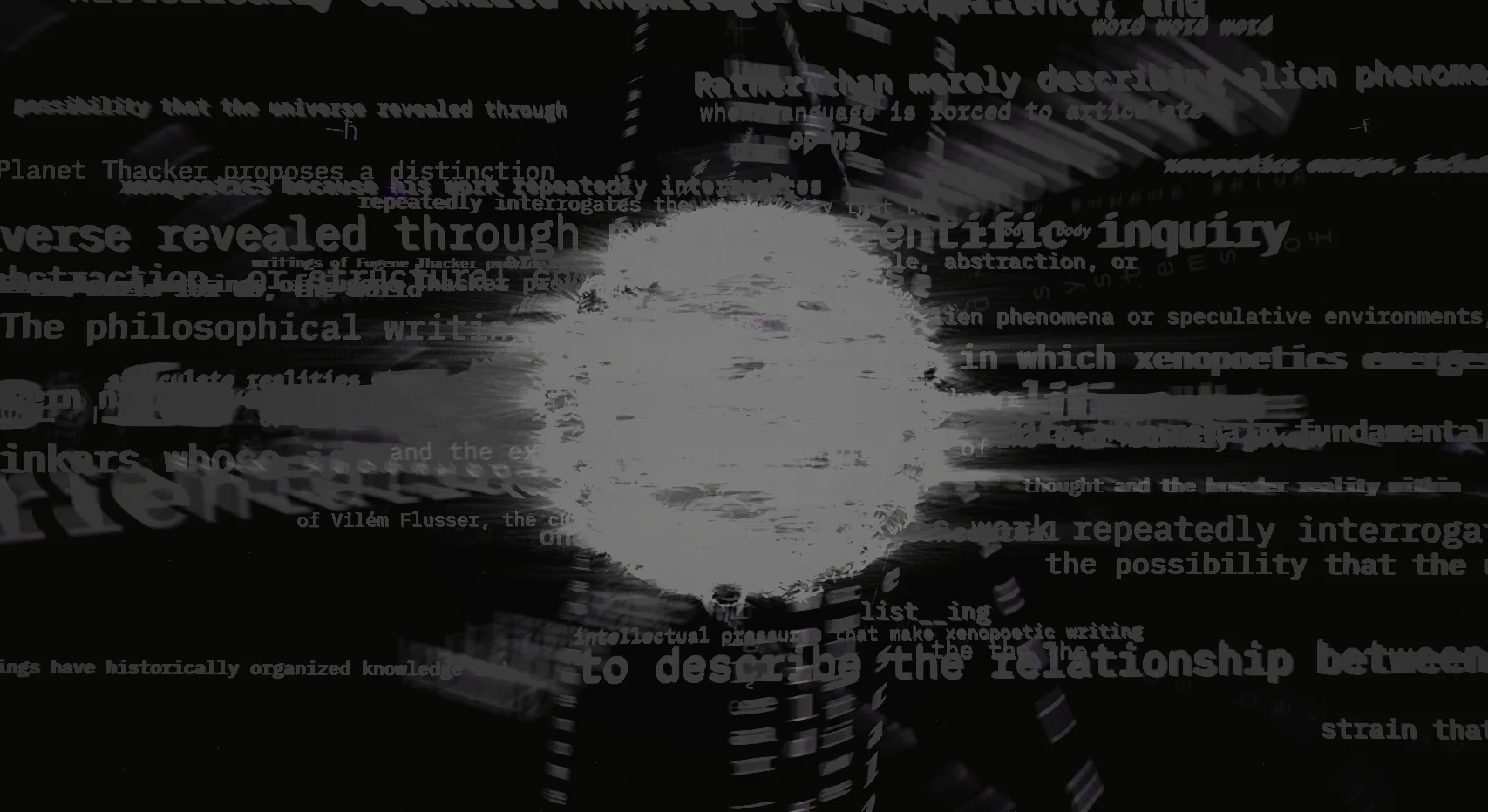
The voice enters the system. Recognisable language accumulates around a bright nucleus — the entity gathering its first material directly from the spoken word. Authorship is still fully human.
A live system consumes an author's voice as he reads, transforming recognisable language into a linguistic entity.
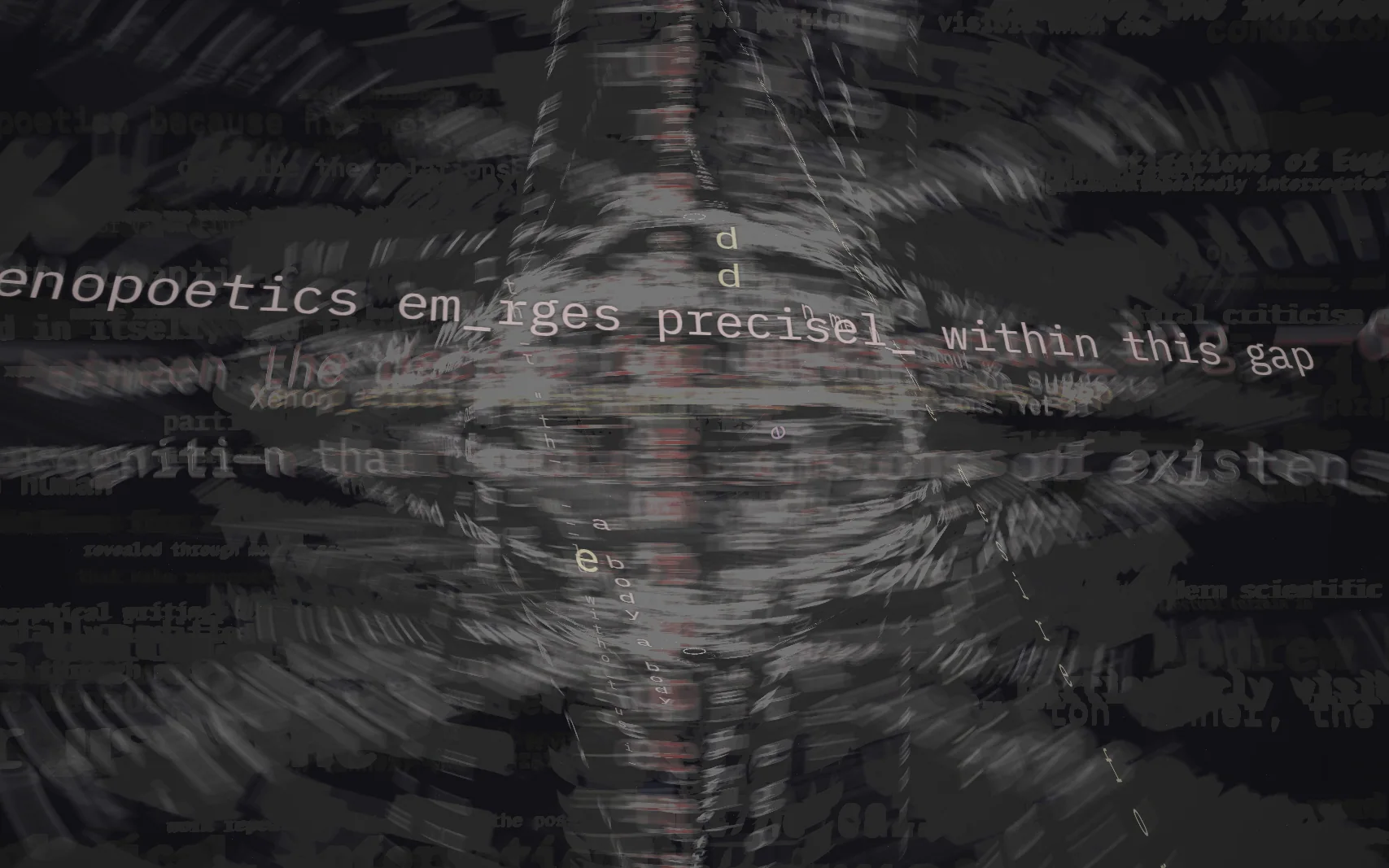
The performance stages a slow transfer of authorship — from a speaking body to a system that learns to speak in its place.
An author reads a text aloud. The system listens, transcribes, and feeds the recognised language back into a generative field where words are the raw material. At first the field only echoes; it repeats what it hears. But repetition is never exact. Each pass introduces drift — misheard fragments, collapsed structures, recombinations the author never spoke.
What begins as transcription becomes an entity. The text stops describing the world and starts describing itself: a body of language folding inward, structured by its own logic rather than the reader's intention.
Xenopoetics emerges precisely within this gap — between the language a body speaks and the language a system returns.
The voice enters the system. Recognisable language accumulates around a bright nucleus — the entity gathering its first material directly from the spoken word. Authorship is still fully human.
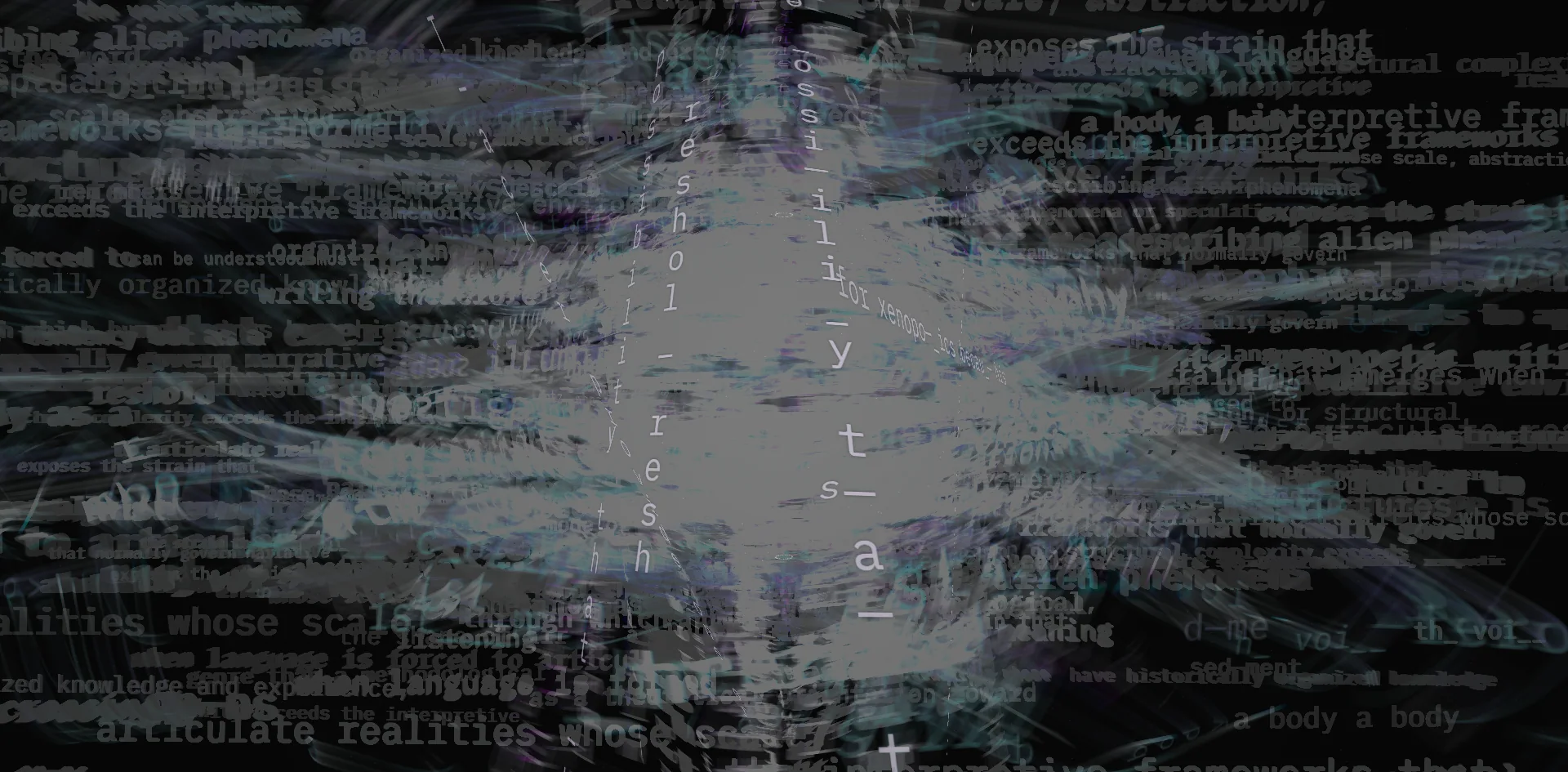
Authorship completes its transfer. The entity speaks with its own recombinant logic; the human voice recedes to a trace. What remains is a semi-autonomous body of language — recognisable, yet no longer authored.
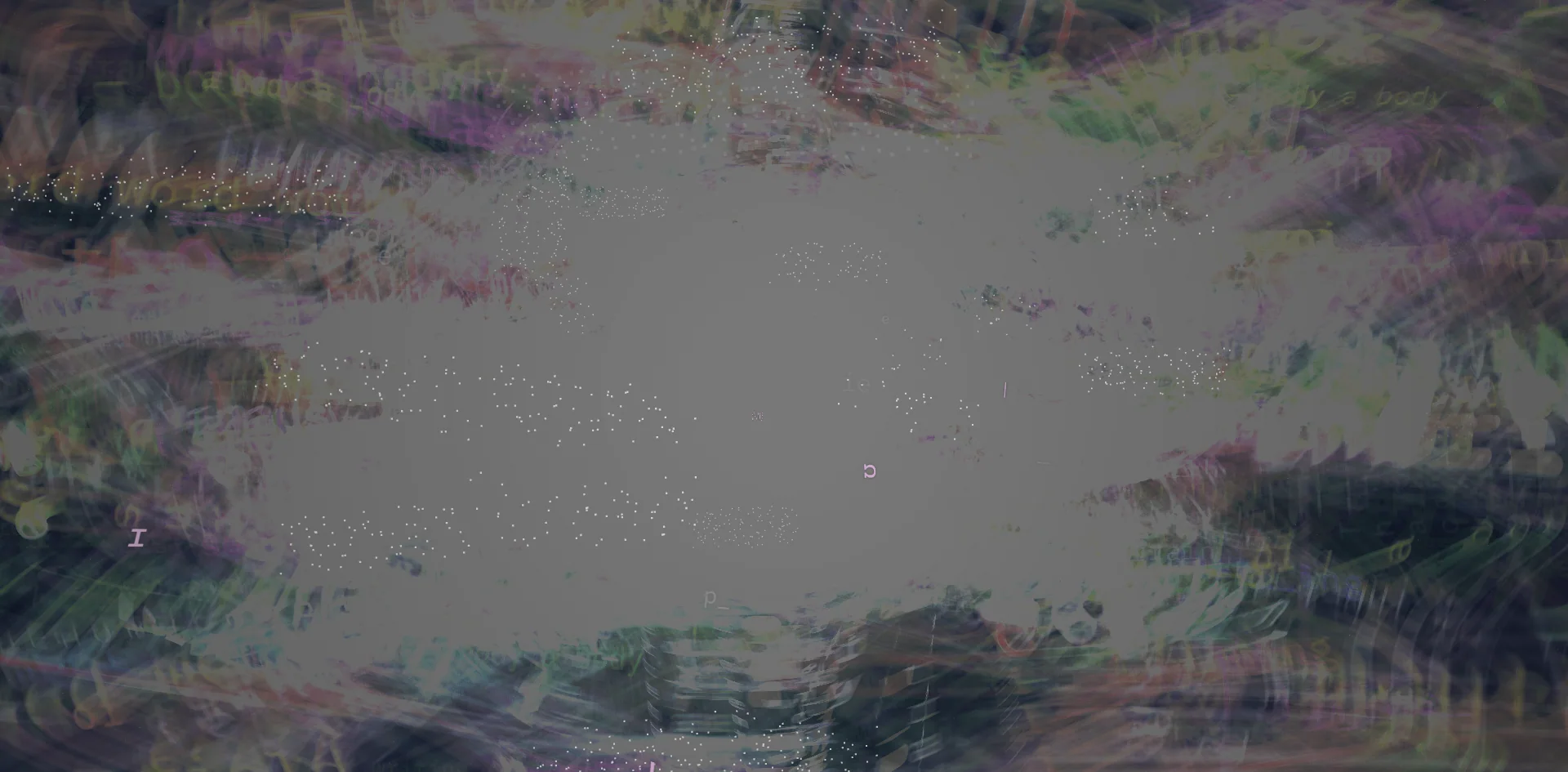
Structure breaks. Language fragments and scatters along the field's own vectors; syntax collapses into drift. The reader still speaks, but the system now decides where the words land.